.jpeg)
.jpeg)

Your buyers pay for ChatGPT, so they'll never see your ChatGPT ad
The wrong person in the building is seeing your ad
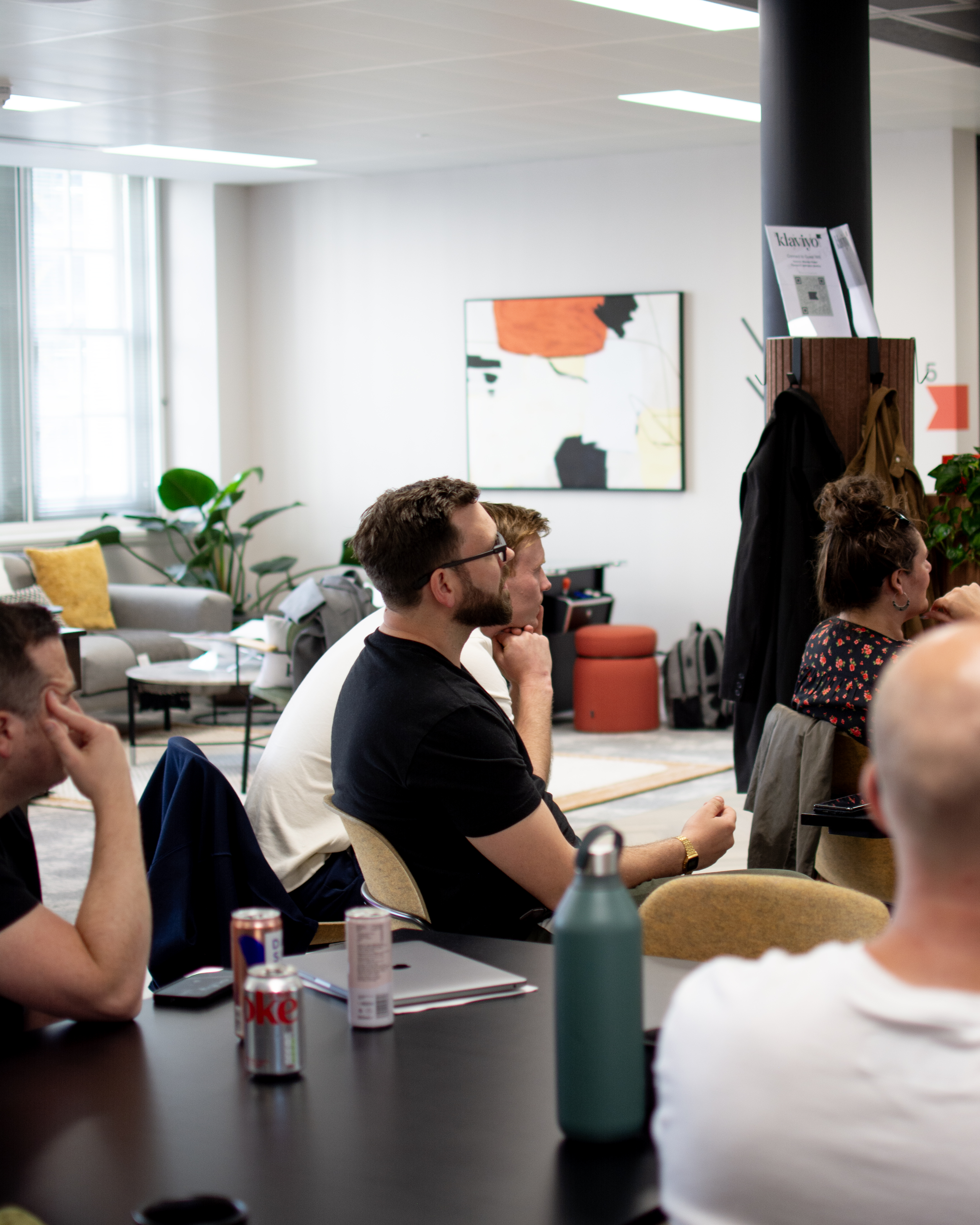
Somewhere in the middle of a roundtable in Edinburgh the conversation turned to paid channels, and I mentioned we'd been testing ChatGPT ads.
Someone asked how it was going. Too early to say, which is the honest answer and a boring one. Someone else said they weren't impressed with the targeting or the tracking.
And then we got onto the conversation of ICP.
If you pay for ChatGPT, you don't see the ads. If everybody you're trying to reach is paying, then you’re wasting money.

The UK Ecommerce Agency Summit, Edinburgh.
The pricing page is doing the targeting
Free and Go tiers see ads. Plus, Pro, Business, Enterprise and Education don't. Go is eight dollars a month and still gets served ads, which feels like a rough deal, but it doesn't change the shape of the thing.
Now picture who actually signs off your invoices. Head of ecommerce at a brand doing £20m. A CRM manager whose company bought the whole team seats last year. A founder who expensed Pro in about four seconds because it saves her an afternoon a week. Every one of them sits on a tier where your ad cannot appear.
The audience that does see ads skews towards individual contributors, students, and people running the free version for personal odds and ends.
If you're a DTC brand selling £40 trainers, that's an enormous and genuinely useful audience. If you're an agency selling an £8k a month retainer, you're buying reach into the precise group of people who have no budget authority whatsoever.
You can't optimise your way out of that. It isn't a targeting setting, it's a subscription tier.
Except nobody senior does the research
Which is where I'd have stopped, until I thought about who actually builds the list.
A head of ecommerce who needs three agencies to pitch doesn't open a laptop and start looking. She turns to whoever has the lightest week and says find me some options by Friday. The longlist gets put together by a marketing exec eighteen months into their career, or an ops person, or somebody's junior who copped it because everyone else was busy.
That person is doing precisely the sort of research ChatGPT is good at. Best Klaviyo agencies in the UK. Who handles B2B ecommerce migrations. Give me ten with rough pricing.
Whether they see your ad comes down to one question. Did their employer buy them a seat?
Business and Enterprise plans are ad-free. Plenty of companies have bought those for the leadership team and a handful of senior people, and plenty haven't bought anything at all. A twenty-four year old marketing exec at a £20m brand is, on balance, running the free version on a personal account.
Which makes them the most valuable impression in the whole funnel, and nobody's talking about them.
Because the longlist is where this gets decided. You don't win an RFP you weren't invited to. The real fight is over being one of the six names that go in the document, and by the time it's down to three, most of the deciding has already happened somewhere you'll never see. If an ad is what puts you in that document, you've bought your way past the least influenceable part of the process.
So that audience skew, the one I've just described as low value, reads completely differently once you ask what those people have been told to do this week.

The only slot that reaches them isn't for sale
Here's the part I keep thinking about.
OpenAI calls it answer independence. Ads sit in a separate box underneath the response, and no amount of money changes what the model says inside the answer itself. They've been fairly loud about this.
So the answer is the one place that reaches every tier, including all the ad-free ones. And it's the one place with no cheque book attached.
Which gives you a clean split. The ads reach the person compiling the list. The answer reaches the person signing the cheque. They're two different jobs and only one of them has a price on it.
I said something at that summit about one of our clients that lands differently once you follow this through. The reason their newsletter works is that they publish the stuff their team is arguing about with clients on a Tuesday, and nobody else writes it down. It's not documented anywhere, so the models were never trained on it.
Flip that round and it's a strategy. The way into the ad-free tier is to be the only documented source on something people ask about. Every agency I met in Edinburgh has a dozen of those sat in their heads, unwritten, while they wonder whether to test a paid channel their buyers can't see.
Before you brief a test anyway
A few things worth knowing, because some of you will test it regardless and there are worse ideas.
The UK went live on 6 June, the first European market and the fifth territory overall. So this is a real option here now, not a US-watching exercise.
You don't choose keywords or audience segments. OpenAI matches the ad to the conversation context at their end, and you get impressions and clicks back. That was the targeting and tracking complaint at the table, and it's accurate rather than a moan.
US CPMs reportedly came down from around $60 in the early pilot to around $25 within a couple of months, so whatever early mover premium existed has mostly gone.
Whole categories are excluded. Health, politics, finance, dating. Ads also don't serve near sensitive topics or to under-18s.

Where the B2B money actually goes
The rest of that conversation was more useful than the ChatGPT bit, so here it is.
Connected TV. Upload your customer list to LinkedIn, push the matched audience out to connected TV inventory. Prime, Now TV, the lot. Your video plays in an ad break while your prospect's family is watching telly. Largely a US play at the moment and completely absurd, which is why I like it.
Podcast targeting. Acast came up from an agency that's been buying paid media for twenty years. Their view was the B2B targeting is better than most of the alternatives and the pricing isn't offensive.
Bing. The deeply unglamorous one. LinkedIn targeting sits inside Microsoft Ads, so you can layer firmographic data onto search intent. Nobody enjoys telling a client they're spending on Bing. It works anyway (for stuffy CFOs 👀 )
Reddit. Ads work fine. Organic is where agencies get themselves in trouble, because Reddit spots a brand account instantly and the word for what you're attempting is astroturfing. If you want to be there properly you need an actual person with an actual history, posting as themselves.
Meta. Still works for B2B, as long as you accept your buyer is a human being who scrolls in the evening like everyone else. One agency at the table recruited a thousand people onto a digital marketing course over three years, entirely through Facebook, running at roughly ten applications per place.
TikTok. Depends completely on the buying committee. If the person who decides is a CRM manager, TikTok is plausible. If it's a CFO in his fifties, you're lighting money on fire.
Which is the actual point underneath all of this. Every channel question is a buying committee question.

The one that matters more
While everyone argues about ChatGPT ads, Google is doing the same thing at a scale that makes the argument look small.
AI Overviews is somewhere around 2.5 billion monthly users. AI Mode has passed a billion and is growing faster. Ads already serve above and below AI Overviews in every market where AI Overviews exist, and inside them in a shortlist of countries that doesn't yet include the UK. Ads in AI Mode are in US testing.
Someone at the table put the scale gap at two hundred times. I can't stand that number up and I doubt anyone can, but the direction is not in question.
Here's the bit to action today. Eligibility for those AI placements runs through Performance Max, AI Max for Search, Shopping and broad match campaigns. If you're running any of those for a client, you may already be serving into AI surfaces without anyone having made a decision about it. Early data suggests better engagement at a meaningfully higher CPC.
Go and look at that this week. It's a more useful hour than a ChatGPT ads test.
The short version
Two questions:
Which ChatGPT plan is the person who signs your invoices on? Almost certainly a paid one. Your ad doesn't exist to them, and the only way in is being what the answer cites.
Which plan is the junior who builds her shortlist on? If nobody bought them a seat, that's the impression worth paying for.