



There's no such thing as your ICP
Notes from Sydney Ecommerce Agency Sumit

There's no such thing as your ICP
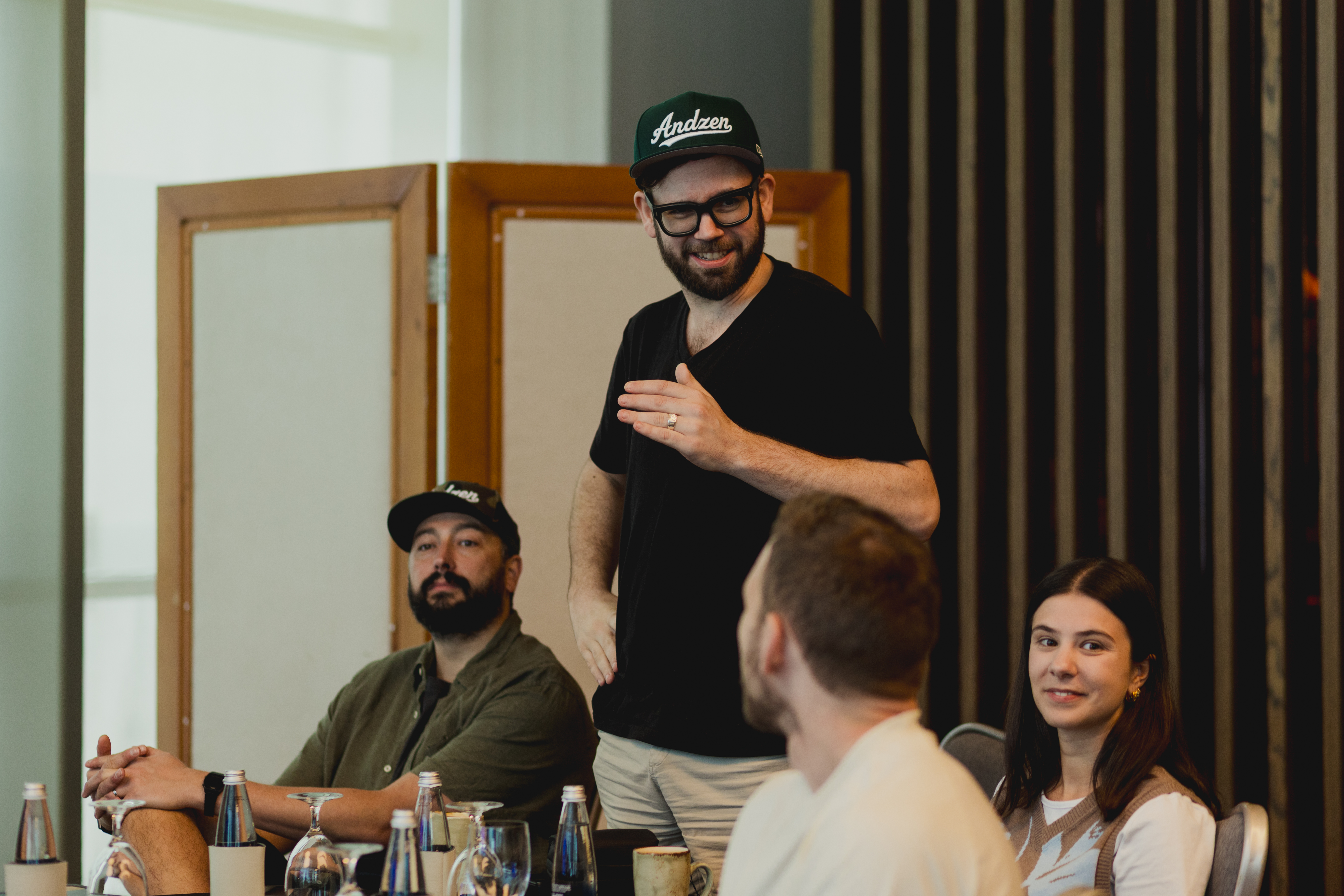
Last week I was lucky enough to travel to the other side of the globe to help co-host the Ecommerce Agency Sumit. There, I ran a set of roundtables in Sydney. Twenty-five-ish agency owners, six rounds, one room. One of the rounds got stuck on a question that sounds simple and absolutely isn't.
Who is your ICP?
Everyone has an answer ready. Mid-market ecom brands. DTC founders doing two to ten million. Heads of Ecommerce at Shopify Plus stores. The answers are confident, and they are all, in a quiet way, wrong.
Here's the thing I said in that room, and the bit the conversation kept circling back to. For high-value B2B services, there is no single ICP. Especially in ecom, where teams reshape themselves every six months and a job title tells you almost nothing about who actually does the job.

The 80% problem
The stat I put on the table was this. Roughly 80% of agency shortlists are built by junior staff. Not the C-suite. Not the person who signs the contract. A junior account exec, a marketing coordinator, someone two years into their career who's been told to "go find three agencies for us to look at."
That one fact breaks the whole idea of a single ICP.
Because the person who decides whether you make the longlist is almost never the person you've decided to write for.

Your "ICP" is at least three people
Sell a high-value service and you are never selling to one person. You're selling to a group, and they don't want the same things.
There's the gatekeeper. Usually junior. Builds the longlist. Time-poor, risk-averse, scanning rather than reading.
There's the champion. Mid-level. The person who actually has the problem you solve and quietly wants you to win, because you'd make their life easier.
There's the buyer. The CMO, the founder, the Head of Ecommerce. Signs the contract. Cares about risk, outcomes, and whether you'll make them look good.
You've been writing for the buyer. Everyone does. It feels right, because the buyer signs the deal.
But the buyer didn't build the shortlist. They were handed it. By the time it reaches them, the filtering is done, and you were either on the list or you weren't. Your beautifully strategic post for the CMO was read, if it was read at all, by a 24-year-old with twelve tabs open who's never heard of you and has until Thursday.
What ecom makes worse
This is bad enough in normal B2B. Ecom makes it worse, because ecom moves too fast for titles to mean anything.
The person running "email and retention" at one brand is a Head of CRM. At the next one it's a 23-year-old who fell into it. At the third it's the founder, still, because they haven't hired for it yet. Same job. Three completely different readers, three levels of knowledge, three different fears.
If your content is pitched at one fixed idea of "the ecom marketer," it lands cleanly for maybe a third of the market and bounces straight off the rest.

What the gatekeeper actually needs
The junior person isn't dumb. That's the lazy assumption and it's wrong. They're just under different pressure than the buyer you imagined.
They're time-poor. They've been handed this on top of their actual job.
They're risk-averse. They don't want to put a bad agency in front of their boss and look like they can't be trusted with a simple task.
They're scanning, not reading. They want to know, in about eight seconds, whether you're obviously competent and safe to forward.
So the content that gets you onto the shortlist isn't the content you're proudest of. It's the content that lets a slightly nervous junior person think "this lot clearly know what they're doing" and get on with their day.
The catch, because there's always a catch
Here's where most advice on this falls over. It tells you to dumb everything down for the gatekeeper, and then stops.
Don't. The gatekeeper gets you onto the list, but then your content walks into the room, and the room has the buyer in it. The buyer does read the deep stuff, eventually, once you're a real contender. If all you've got is skimmable competence, you'll get shortlisted and then quietly beaten by someone with an actual point of view.
So your content has two jobs, and they are not the same job.
One: get past the gatekeeper. Scannable, specific, obviously competent.
Two: survive the room. Opinionated, deep, the kind of thing that makes a buyer think "I want to be in business with whoever wrote that."
Most agencies do neither. They write a third thing. A strategic, big-picture post for an imaginary CMO who never actually sees it, because it got filtered out long before the room by a junior person who needed something simpler and never got it.

What to do on Monday
Stop writing for "the ICP." There isn't one. The real job is harder and more interesting. You need to be the obvious choice for every person on the buying committee, and they are not the same animal.
There's the junior, who needs career advice as much as they need an agency. Putting you forward has to feel like a smart, safe move that makes them look good in front of a boss they're slightly scared of.
There's the ecom manager, who wants to do something outrageous enough to win an ecom award and frame it on the wall, but not so outrageous it gets them fired. Outrageous but safe. You have to be the agency that lets them have both.
And there's the CFO, who doesn't fully understand why they're in this meeting, surrounded by people who want to spend tens of thousands of pounds on what looks, from where they're sitting, like a bunch of 1s and 0s. They need a reason to nod that has nothing to do with creative and everything to do with risk and return.
Three people. Three completely different definitions of "obvious choice." One case study, written for an imaginary buyer, serving none of them.
Here's the good news. You no longer have to pick.
Vibe coding has made this absurdly cheap. An afternoon on Lovable, and you can build a case study page that changes depending on who's reading it. A toggle at the top. Reading as a junior, you get the scannable version, the proof, the "this is a safe bet" framing. Reading as an ecom manager, you get the bold creative and the award angle, the bit they screenshot. Reading as a CFO, you get the TLDR. The numbers, the return, and not a single adjective.
Same story. Three lenses. The reader picks the one that speaks to them.
Writing a case study three ways used to be a luxury nobody could justify. It isn't anymore. The tools got cheap. The only thing stopping you is the habit of writing for one person who was never going to read it anyway.
So this Monday, take your best case study and write the CFO's version. Forty words, one number, no flair. Then build the toggle. You'll have done something almost nobody else in your space has bothered to do, for the price of an afternoon.