
.jpeg)
.jpeg)
The "We Need to Be on TikTok" Meeting
Have you had it?
Every agency and every SaaS company has had this meeting. The details change, but the structure is always the same. Someone senior walks in, usually first thing on a Monday, and says some version of "have you seen what [competitor] is doing on [platform]?" The room goes quiet. A few people nod. And then the words that launch a thousand mediocre content strategies: "We need to be on there."
It might be TikTok. It might be Threads. It might be a podcast, or a YouTube channel, or a Substack. The platform is almost irrelevant. What matters is the pattern: someone saw a competitor doing something that looked successful, had a brief panic, and decided the solution was to replicate it immediately.
This is how agencies that advise clients to be strategic about their marketing end up being completely un-strategic about their own. It is the cobbler's children going barefoot.

I have been in rooms where this conversation has played out more times than I care to count, and it always follows the same trajectory. The initial excitement lasts about a week. Someone is tasked with "looking into it." A strategy deck gets started but never finished. Three or four posts go up, each one slightly less enthusiastic than the last. Then silence. Six months later, someone else sees a different competitor on a different platform, and the whole cycle begins again.
The fundamental problem is that "we need to be on TikTok" is not a strategy. It is a reaction. And reactions make terrible foundations for anything, because they are born from anxiety rather than intent. Nobody in that meeting is asking "what are we trying to achieve, and is this platform the best way to achieve it?" They are asking "are we falling behind?" which is a completely different question and one that leads to completely different decisions.

Choosing a marketing channel because your competitor is on it is like choosing a restaurant because you saw your neighbour walk in. You have no idea whether they are enjoying themselves. You have no idea whether the food is any good. You just saw them go through the door and assumed they must know something you don't. For all you know, they are in there having a terrible time and wishing they had stayed home.
And here is the thing about competitor activity on social platforms: you are seeing the output, not the input. You see the polished TikTok with 15,000 views. You do not see the fourteen takes, the three hours of editing, the dedicated person whose entire job is making those videos, or the fact that those 15,000 views have generated precisely zero qualified leads. You are comparing your behind-the-scenes to their highlight reel, which is exactly what you tell your clients not to do.
The other thing nobody talks about in the "we need to be on TikTok" meeting is opportunity cost. Every hour someone spends learning a new platform, developing a content format, building an audience from zero, is an hour they are not spending on the channels that already work. This is not a minor consideration. For most agencies and SaaS companies, the marketing team is small. Often it is one or two people doing everything. Adding a whole new channel to their plate does not expand capacity. It dilutes it.

I have watched agencies launch YouTube channels with enormous enthusiasm, produce eight episodes of progressively declining quality, then let the whole thing die while never updating the link in their email signature. The YouTube channel becomes a graveyard of good intentions. And the person who was tasked with running it, who never asked for the job in the first place, silently adds it to their list of things they feel guilty about not maintaining.
The smarter question, the one nobody asks in these meetings, is not "should we be on this platform?" It is "what are we already doing that we could be doing twice as well?" Almost every agency and SaaS company I work with has an underperforming blog, a LinkedIn presence running at half capacity, an email list they barely use, and a back catalogue of insights and thinking that has never been properly packaged. The last thing they need is another channel to neglect. What they need is to go deeper on what they have already got.
There is a version of this that works, by the way. Expanding into a new platform can be the right move. But only when it is a deliberate, resourced decision based on where your audience actually is, not where your competitors happen to be posting. The difference between a strategic platform expansion and a panic-driven one is the same as the difference between moving house because you have found somewhere better and moving house because you saw your mate's kitchen on Instagram. One is a plan. The other is envy with a removal van.
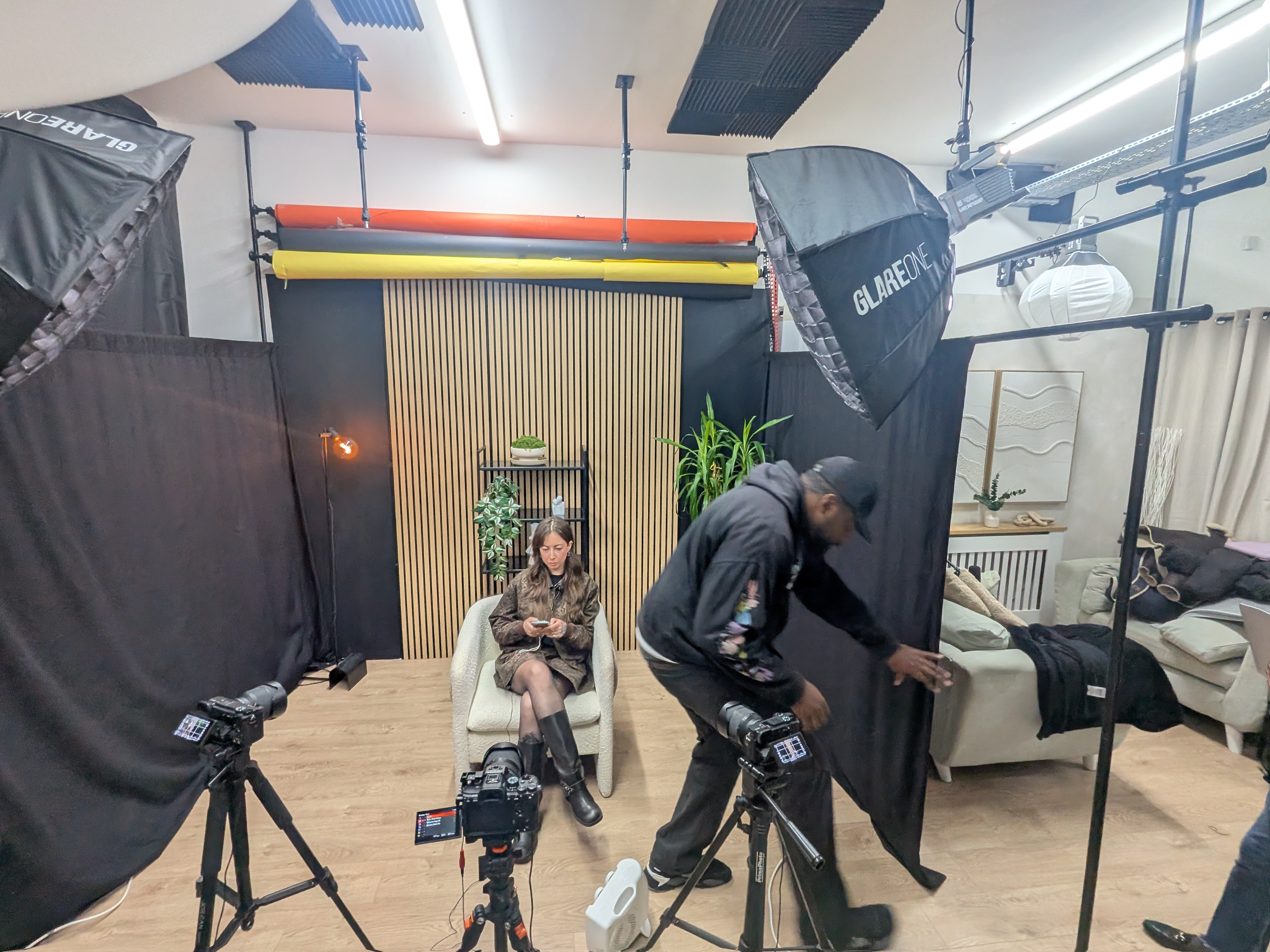
A while back we built a podcast called Open Tabs with Squashed Pixel. The brief was not "we need to be on TikTok." It was that they wanted to build a community around their brand, and they did not want to make another talking-heads-on-Zoom podcast that nobody would watch. So we built something distinctive. We interview ecommerce founders about what tabs they have open in their browser, the things they are actually reading and thinking about, while they drink an open tab. Four drinks. Four rounds. Four tabs. Every episode filmed in person.
One clip from that podcast did 350,000 views on TikTok. But the TikTok number is not really the point. The point is that one filmed conversation produces thirty or forty clips, a stack of articles, social posts, newsletter content. The platform was downstream of the format. They started with something worth making, then let it spread across the channels their audience was already on. That is what deliberate looks like.
The real reason the "we need to be on TikTok" meeting keeps happening is that it feels like progress. It feels like action. Saying "we should double down on our blog and email strategy" does not give you that same rush of novelty. It sounds boring. It sounds like maintenance. But maintenance is where most of the value is. The companies that win at marketing are not the ones on the most platforms. They are the ones who are genuinely excellent on one or two.
@opentabs.ecom Taylor Swift wearing one of my dresses?! 👗 My first thought was a lawyer! Turns out, Taylor Swift changed my business forever. #FashionFin... See more
So the next time someone walks into a meeting and says "we need to be on TikTok," try this instead. Ask them three questions. Who specifically on our team is going to own this, and what are they going to stop doing to make room for it? What does success look like after six months, and how will we measure it? And if we invested the same time and energy into our existing channels, what would happen?
If those questions cannot be answered clearly and confidently in the room, the meeting should be over. Not because TikTok is wrong, but because the decision is not ready. And a half-baked decision executed on a new platform is worse than no decision at all, because it wastes time, demoralises the team, and produces content that makes you look like you do not know what you are doing. Which, if we are being honest, in that moment you don't.